What 'loose parts' means
Loose parts are simply open-ended materials — objects with no fixed use. A wooden spoon can be a drumstick, a flag, a magic wand or a mixing tool. That flexibility is where imagination lives.
Because loose parts don't do the play for the child, the child has to bring themselves to the material. This is where confidence, problem-solving and language quietly grow.
A short list to try this week
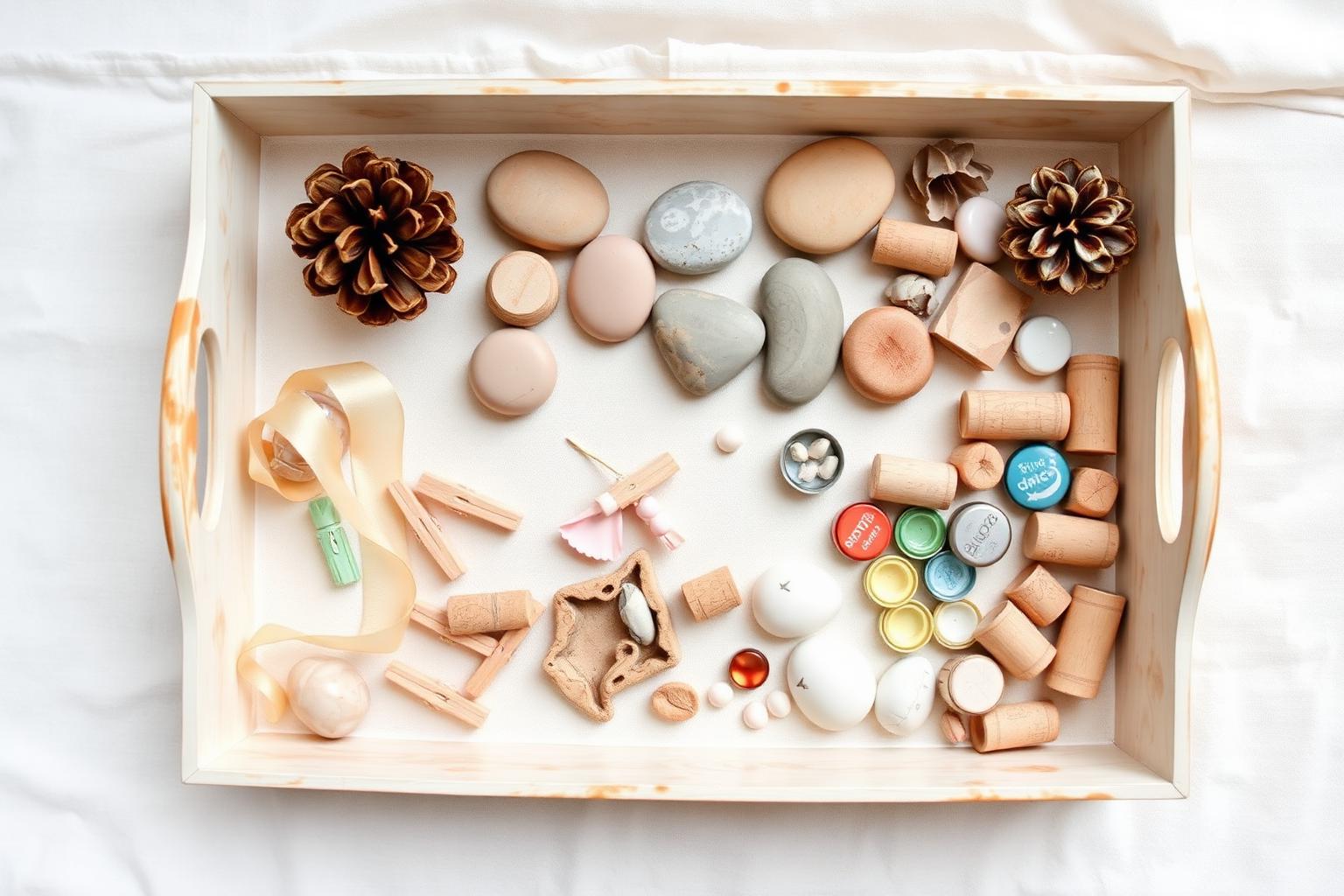
Cardboard tubes and boxes. Bottle caps and lids. Fabric offcuts and ribbon. Pinecones, smooth stones and shells. Wooden pegs. Empty jars with lids. Corks. Old keys.
Set a small tray of two or three of these out, without instructions, and see where your child takes it. Try not to suggest — just be nearby. If nothing happens for a while, that's fine. Boredom is often the doorway to the best play.
A gentle note on safety
Loose parts should be sized appropriately for the child in front of you — very small items are not suitable for children under three, and anything used for play should be clean and free of sharp edges.
Bring these ideas into practice
Book a workshop to explore this further with Amy.
Trusted early years resources
Every workshop is grounded in Irish early years frameworks and national guidance.
- Aistear: the Early Childhood Curriculum Framework (NCCA)
- Síolta: the National Quality Framework
- Children First national guidance (Tusla)
- First 5: Ireland's strategy for babies & young children
- Early Childhood Ireland
Workshop themes · Book a date · Counties we serve · Play & learning blog · FAQ · About Amy